ShopiPress.
Explore

EN

Shopify + WordPress · practical model

Use Shopify for commerce and WordPress for publishing.

ShopiPress connects the catalog instead of asking you to rebuild the transaction system. Shopify keeps products, inventory, cart, transactions and checkout. WordPress gains product pages, collections, guides, comparisons and landing pages.

Examine ShopiPressRead the implementation guides
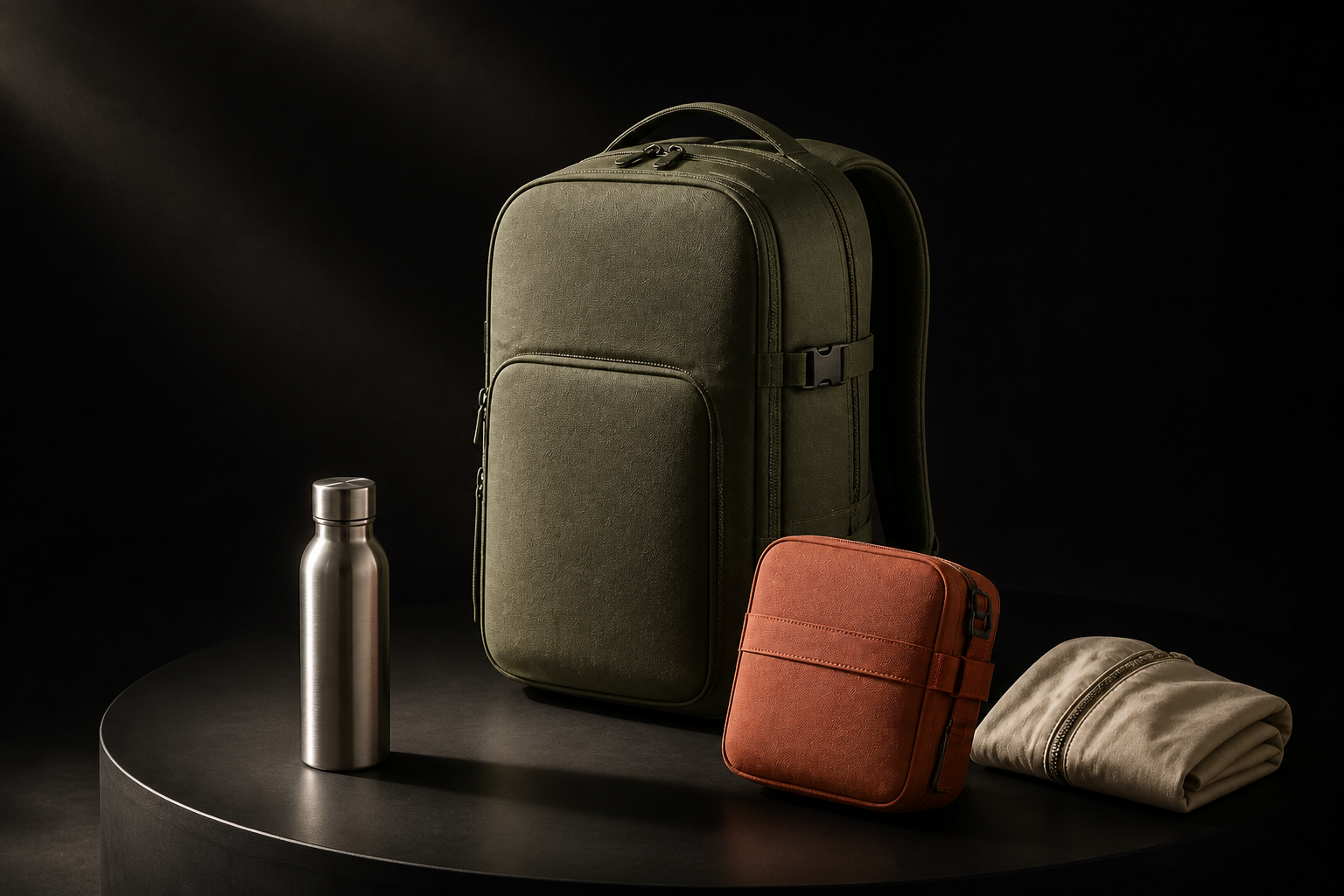
Shopify storeMorrowfield Shopify storefront, the exact ShopiPress plugin interface and a WordPress product page showing the same fictional product.Transit 24 · $188 CAD · Cart and checkout · Shopify
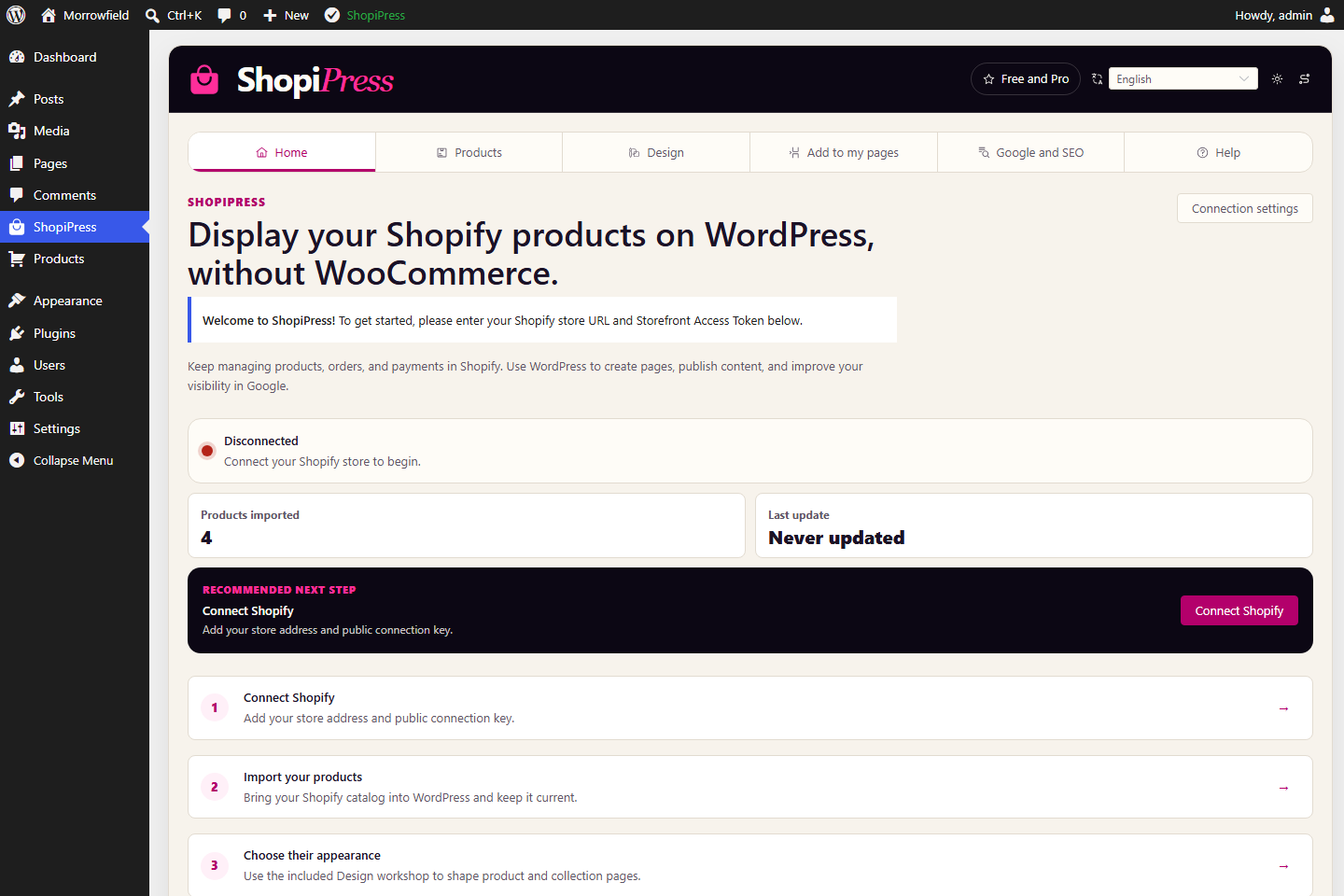
ShopiPressMorrowfield Shopify storefront, the exact ShopiPress plugin interface and a WordPress product page showing the same fictional product.
WordPress siteMorrowfield Shopify storefront, the exact ShopiPress plugin interface and a WordPress product page showing the same fictional product.Pages and content · WordPress · Buying returns to Shopify checkout

Shopify → ShopiPress → WordPress ↩ Buying returns to Shopify checkout

01

Why combine Shopify and WordPress?

A Shopify store is designed to operate commerce. WordPress gives editorial teams a flexible publishing system, theme ecosystem and page-building workflow. ShopiPress lets a merchant use both without presenting two independent commercial catalogs.

02

This is not a complete store migration.

ShopiPress does not transfer orders, customers, payments or checkout into WordPress. It synchronizes catalog records into WordPress content and provides rendering tools. Buying returns to Shopify.

Shopify · ShopiPress · WordPress

One store. Two systems doing the jobs they do best.

ShopiPress connects the catalog without pretending WordPress has become the commerce engine.

SHOPIFY

Products, inventory, cart, transactions and checkout remain in Shopify.

SHOPIPRESS

ShopiPress connects the catalog, runs the current manual synchronization and provides the rendering tools.

WORDPRESS

WordPress gives the catalog product pages, collections, editorial context, landing pages, templates and an indexable publishing surface.

Choose the primary page before you publish both surfaces.

Choose the primary page before you publish both surfaces.

The same product may have a Shopify URL and a WordPress URL. Decide which page should be canonical, verify rendered canonicals and robots, keep excluded URLs out of sitemaps, and inspect schema on the final response. ShopiPress does not guarantee crawling, indexation or ranking.

  1. 01Select the canonical source
  2. 02Verify rendered HTML
  3. 03Control archives and sitemaps
  4. 04Inspect schema and internal links
Choose the primary page before you publish both surfaces. →

Four teams, one catalog source.

01

Merchants who want richer product storytelling

02

Editorial brands publishing guides and comparisons

03

WordPress agencies building catalog experiences

04

SEO teams governing duplicate product surfaces

What the current candidate does not include

What the current candidate does not include

The candidate is intentionally explicit about absent engines. Do not plan a launch around automation or integrations that are not delivered.

  • No scheduled synchronization, webhook queue or resumable background run.
  • No local media mirroring, Shopify metafield mapping or ACF mapping.
  • No multilingual catalog synchronization or multi-store agency tooling.
  • No saved advanced facets, merchandising rules, design presets or settings import and export.
  • Priority support is not included in the documented feature scope.

Straight answers

Before you connect the two systems.

01Does ShopiPress replace Shopify?

No. Shopify remains the source for commercial product data, inventory, cart, transactions and checkout. ShopiPress publishes catalog content in WordPress.

02Is WooCommerce required?

No. ShopiPress does not require WooCommerce because WordPress is the publishing surface and Shopify remains the commerce system.

03Where does checkout happen?

Buying actions return to Shopify. The customer completes the cart, transaction and checkout through Shopify.

04Do products become WordPress content?

Yes. The current candidate creates WordPress product posts and collection and product-tag terms from synchronized Shopify catalog records.

05Is synchronization automatic?

No. The current candidate provides a manual full-catalog synchronization that is classified as partial. Scheduled jobs, webhooks, queues and resumable synchronization are not delivered.

06Can I use Gutenberg, Elementor or WPBakery?

The FREE edition includes 17 dynamic Gutenberg blocks and 27 public shortcodes. The exact PRO candidate adds 17 native Elementor widgets and 17 WPBakery elements, with documented differences in coverage and controls.

07What data goes to Shopify, Freemius and Pagup?

Catalog and cart requests use Shopify's Storefront API with the configured public token. Freemius handles optional opt-in, licensing and premium delivery. The observed candidate sends no plugin-usage telemetry or licensing request directly to Pagup.

08What is the difference between FREE and PRO?

FREE contains the connection, WordPress catalog model, current manual synchronization, default templates, Gutenberg, shortcodes, basic discovery and the basic design workshop. PRO adds the delivered builder integrations and advanced visual-design controls. Pricing and public availability are not yet authorized.